Ambition means little without the infrastructure to deliver it. A rescue is only as good as the equipment that reaches the site, the facility that receives the animal, the clinical capability that treats it, and the systems that record what happened and make the next response better. Conservation problems do not wait for perfect tools, so where the right ones do not exist, we build our own. This page is about that machinery: the centres, equipment, technology, and innovation that turn intent into outcomes, thousands of times a year.
Our centres
A Wildlife Transit Treatment Centre (TTC) is built around a single idea: wild animals pass through. The centres we operate centres in Pune and Nashik in Maharashtra, and in Ponda, Goa, are built and run in partnership with the respective State Forest Departments. They are designed for treatment, rehabilitation, and release, never for permanent display or captivity. Every design decision follows from that principle: quarantine and isolation facilities that protect both patients and wild populations, species-appropriate enclosures that preserve natural behaviour and minimise human habituation, and recovery spaces built to prepare animals for the landscapes they return to, not the people who treated them.
The transit model matters because it keeps the system moving. Units, enclosures, and clinical capacity are perpetually turned over to the next emergency, which means the centres function less like sanctuaries and more like hospitals: admission, treatment, recovery, rehabilitation, pre-release conditioning, and discharge. It is a harder model to run, and the only one that serves wild animals as wild animals.
In the field and the hospital
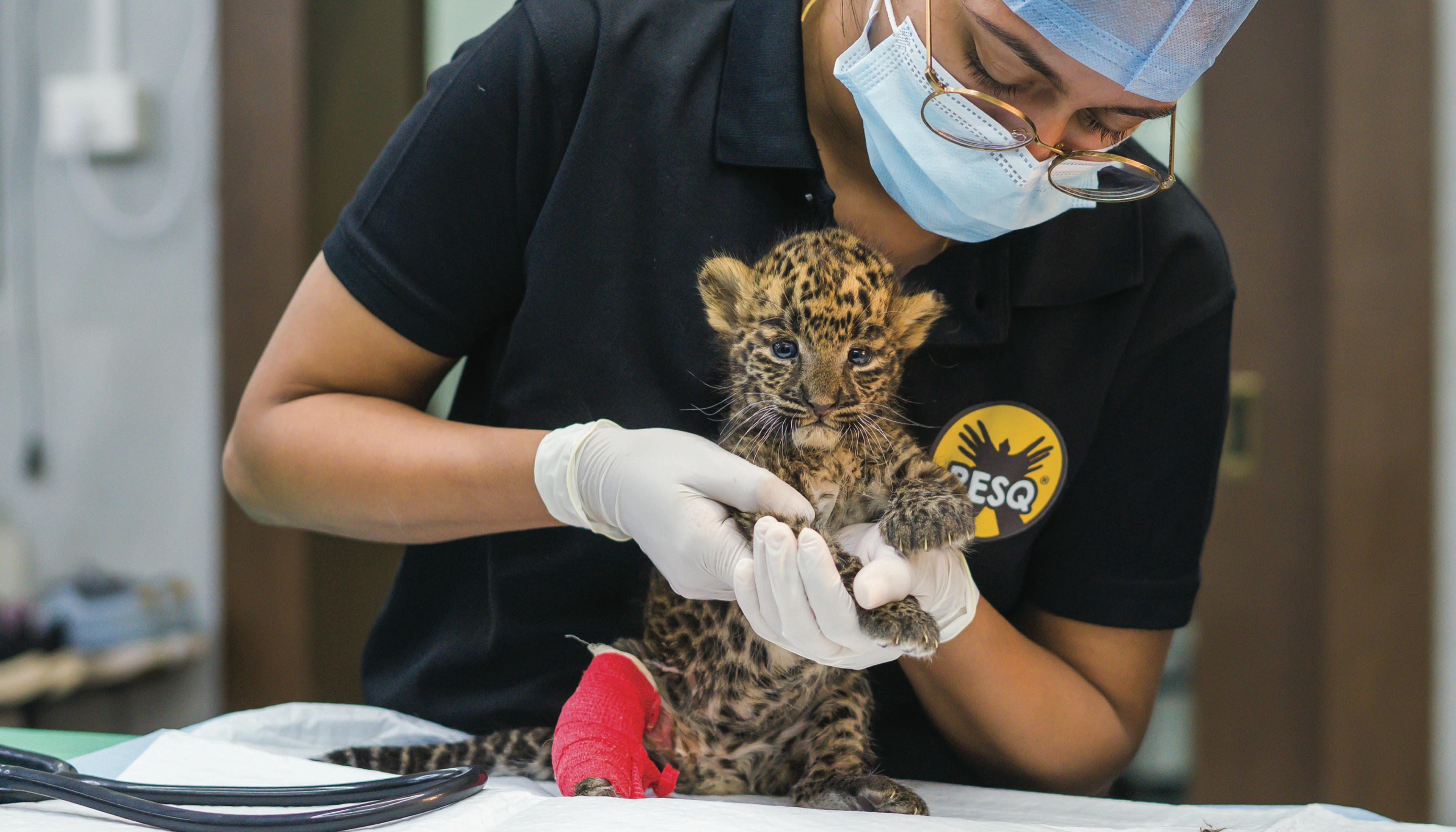
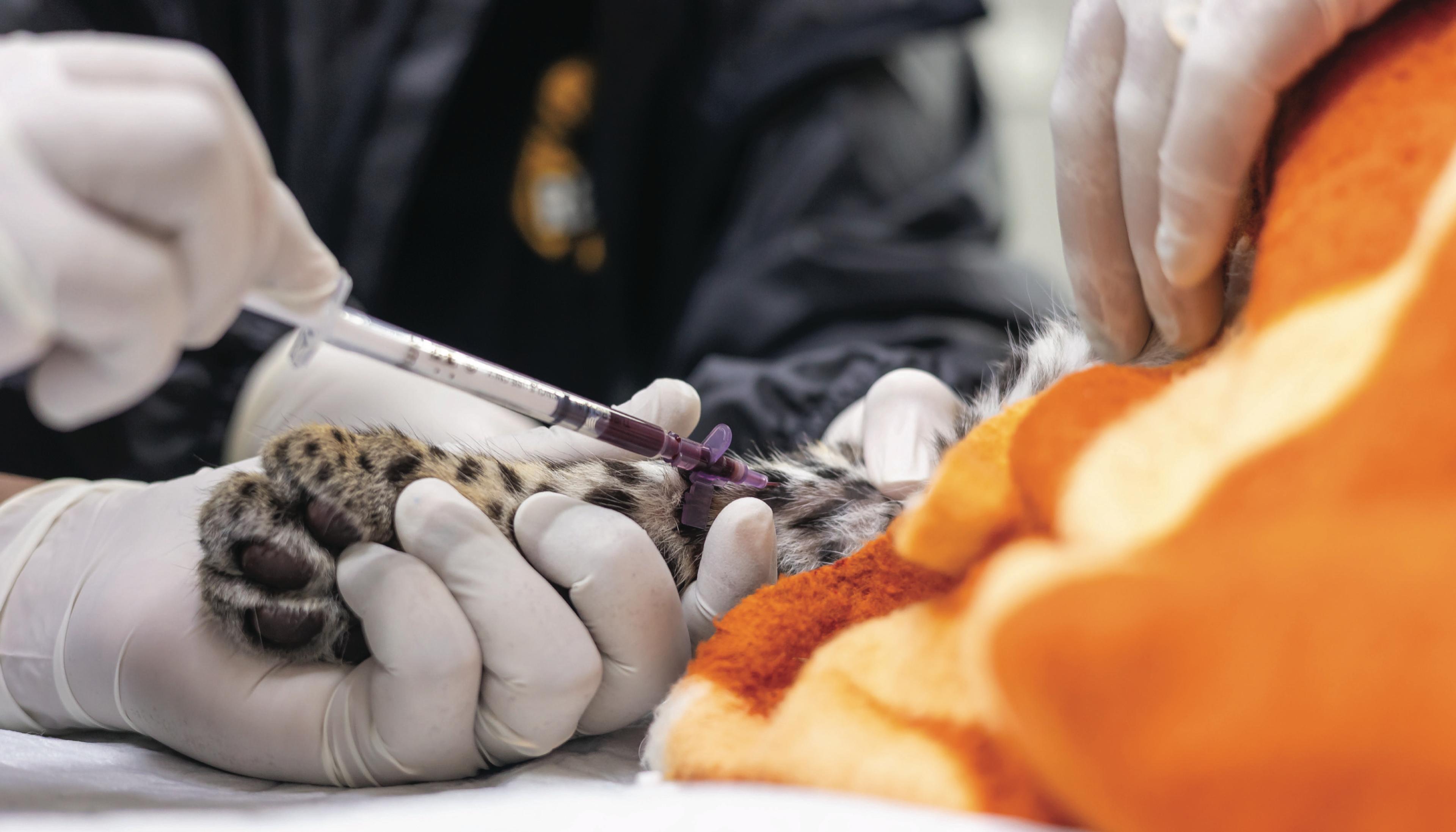
A wild patient cannot describe its symptoms, tolerate handling, or cooperate with treatment. That inverts the usual logic of medicine: the less a patient can participate, the more the equipment must compensate. Our centres are equipped for diagnostic imaging, surgery, and laboratory work across taxa as different as raptors, big cats, and crocodilians, because a facility that treats 270+ species cannot design around a typical patient; there is none.
The same standard extends into the field. Rescue and transport equipment, species-specific capture and restraint gear, and vehicles configured for everything from a snake in a kitchen to a leopard in a well mean that treatment effectively begins at the rescue site, not at the centre gate. In wildlife emergency response, the quality of the first hour is decided by the equipment that arrives in it.
Systems
At more than 10,000 emergencies a year, memory and paperwork fail. Systems do not. At the front of ours sits the Command Control Centre, managing our 24-hour helpline and every call that comes through it, dispatching and coordinating field response so that no emergency depends on who happened to pick up the phone. From that first call, every case moves through structured data systems covering admission, treatment, rehabilitation, and release, while EcoTrack maps threats across landscapes and follows animals after release, closing the loop that most rescue work leaves open: knowing what happens to a patient once it returns to the wild.
The same discipline underpins our disease surveillance, where symptomatic animals, post-mortem findings, and pathology results are tracked as data rather than anecdotes, contributing to early warning at the human-wildlife interface. And it extends behind the scenes: purpose-built systems for HR, administration, and inventory run the organisation itself, because an operation of 150+ people and three centres cannot deliver clinical precision on top of administrative chaos. What we record today becomes the evidence that shapes protocols, training, and policy tomorrow.

Every animal we handle, recorded from admission to release: 35,000+ records across 270+ species, accessed by the Forest Department for monitoring and release management.

The 24-hour helpline's nerve centre, where RESQ CT teams and Forest Department personnel, from guards to senior officers, coordinate every response on one shared system.
The maps beneath the mission: rescues, threats, conflict patterns, and released animals tracked across landscapes, following every story from hotspot to habitat and beyond.
Structured learning for the field: the in-house academy that trains our own teams today, and is built to open conservation education to learners everywhere tomorrow.

The inventory backbone of our three centres: every medicine, instrument, and equipment, what exists, where it sits, and when it runs low, all stocked before it ever matters.

The organisation's internal backbone, managing HR, administration, and daily operations for a 150+ person team, because conservation runs on people as much as systems.
Innovation
Wildlife conservation is full of challenges no catalogue has solved. Equipment designed for domestic animals rarely survives contact with wild ones, and tools built for Western contexts rarely fit Indian field realities. Our innovation work exists to close those gaps: taking the problems our field and clinical teams encounter, designing solutions, testing them in real operations, and refining them through the feedback only frontline use can provide.
The result is a culture as much as a workshop: rescuers, veterinarians, and technologists iterating together, so that the tools of this work evolve as fast as its challenges do. What proves itself in our operations is standardised, documented, and shared, because a solution that works should never remain a local advantage.
People and partnership
Infrastructure does not run itself. Every centre, instrument, and system on this page is operated by a team of over 150 people, and multiplied by the government, academic, and institutional partnerships that extend its reach far beyond what we could achieve alone.
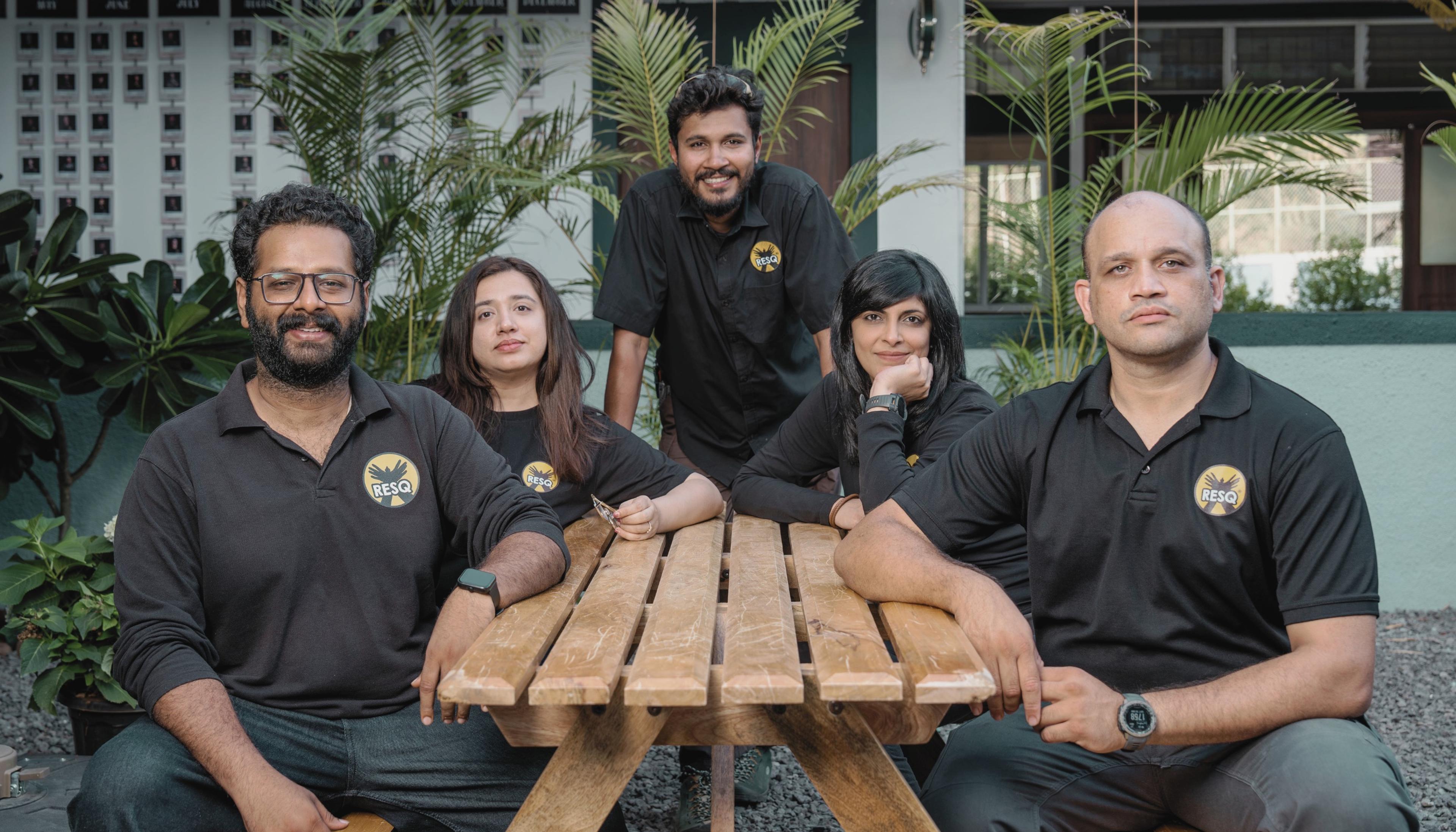 Read moreOur TeamMeet the people, and the detection dogs, behind every rescue, recovery and release.
In About us
 About RESQ
 Our story
 Our purposeYou're hereOur approachOur team
 Our partners
Support this work
A rescue is only the first step. Treatment, rehabilitation, release and the prevention work that follows all depend on people who choose to stand behind it.
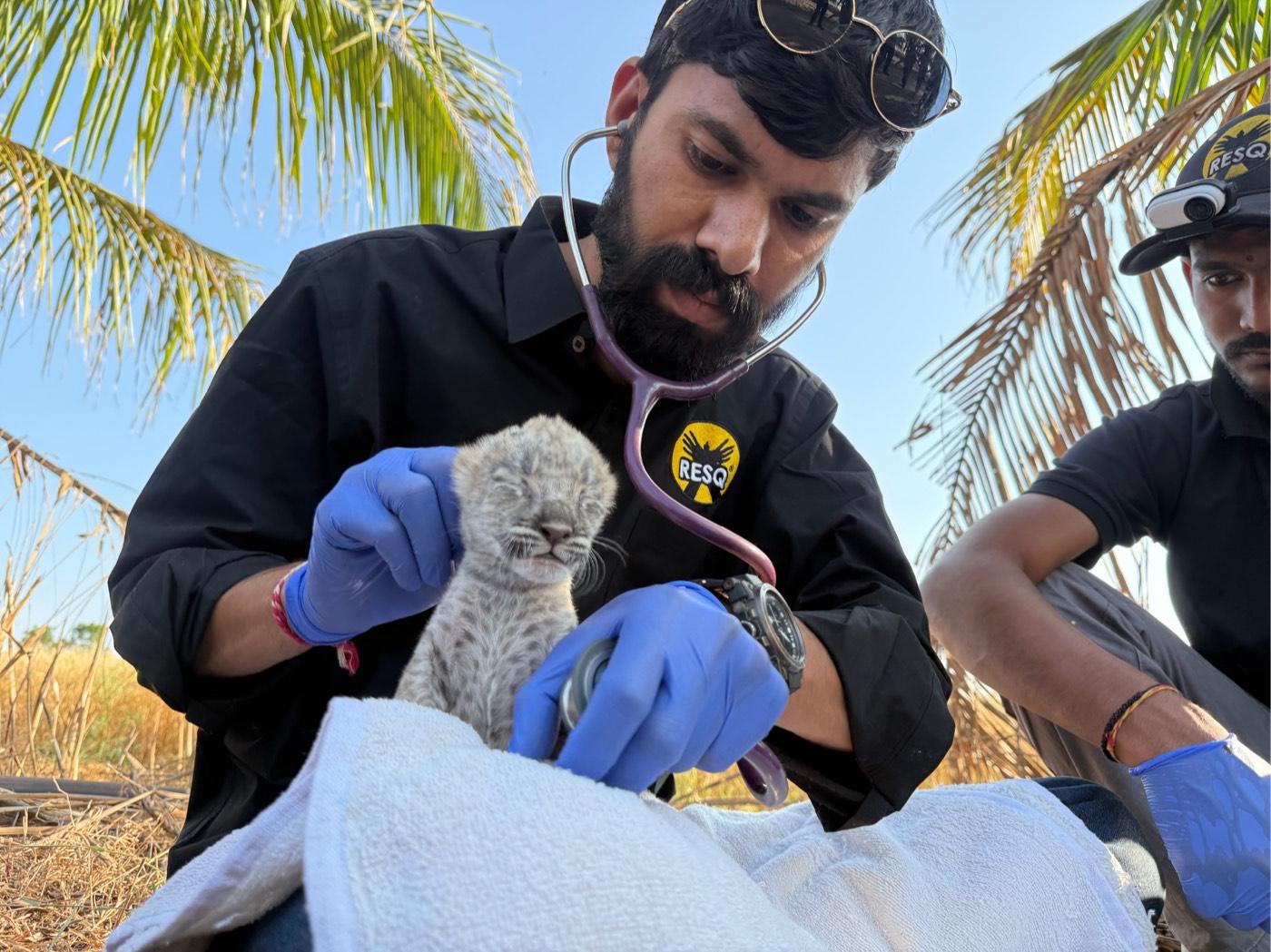
DonatePhoto: a RESQ vet examines a rescued leopard cub in the field.
Work alongside us
Individuals, students and groups support our centres, field teams and outreach programmes through the year. Every volunteer is trained and works to a shared code of conduct.
Volunteer with us