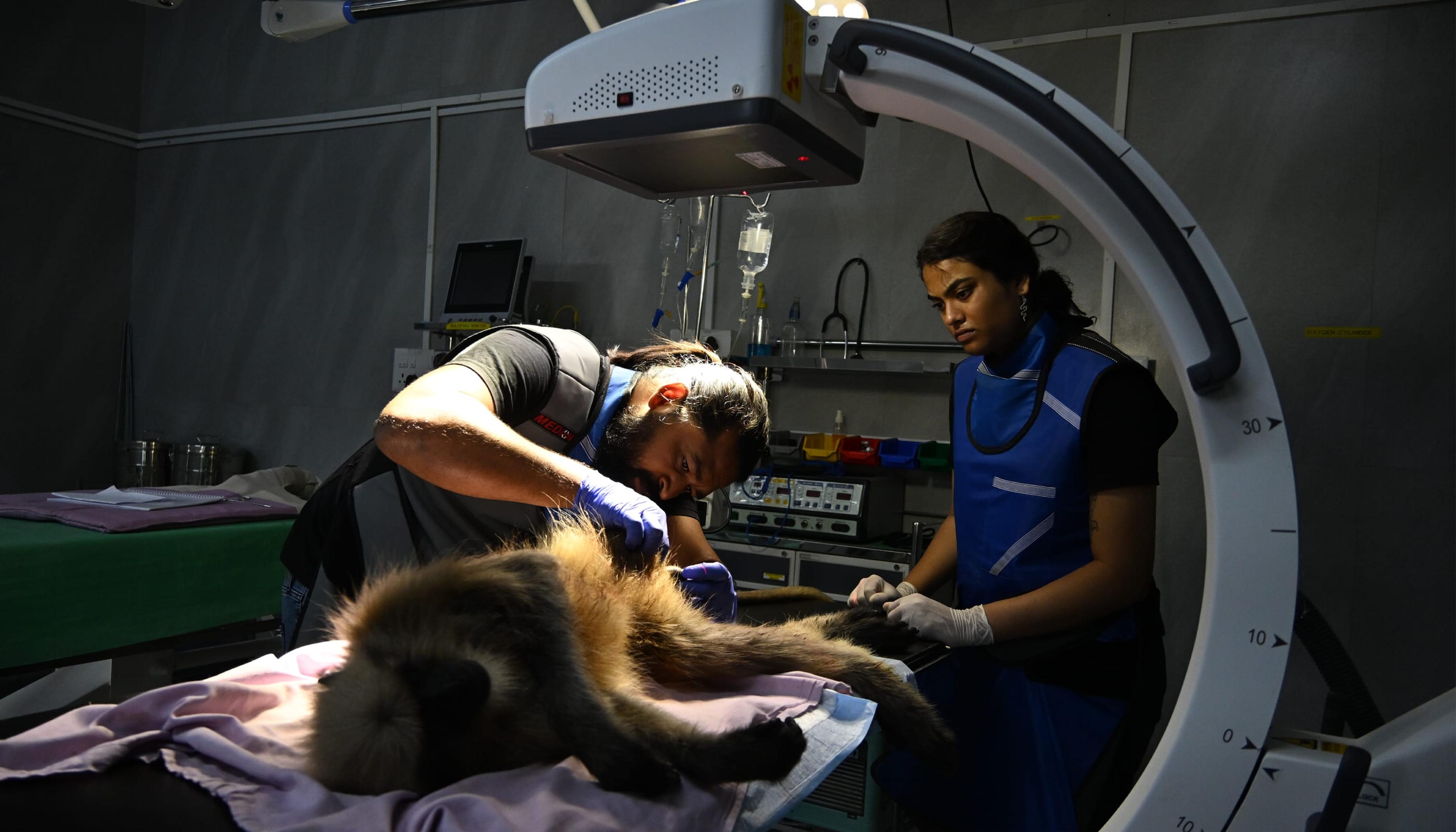
The RESQ Conservation Action and Mentorship Programme (CAMP) is how people spend time with us: a two-hour Insight Visit to understand the work, or a supervised placement to help do it. Both happen inside our Wildlife Transit Treatment Centres, run in partnership with the Maharashtra Forest Department.
270+
Species of mammals, birds and reptiles
10–15
New cases on an average day
Where you are coming
The animals here are patients. They arrive injured, orphaned, displaced, or caught somewhere they never meant to be, and everything we do is in service of sending as many of them home as we can.
This is not a zoo where you can comfortably view animals, and you may see fewer animals than you expect. The ones recovering well are usually the ones who stay furthest from us, and we are glad of it. What we can show you instead is the work.
How a leopard is tracked, safely captured and returned to the forest. How a raptor's fractured wing is repaired in a bird that cannot be told to rest, and flight-tested again and again before anybody agrees it is ready to go. How a conversation with a housing society at seven in the evening decides whether anybody is bitten by a snake at nine. And why, after nearly two decades of this, the most difficult species we work with is still our own.
Two ways to join us
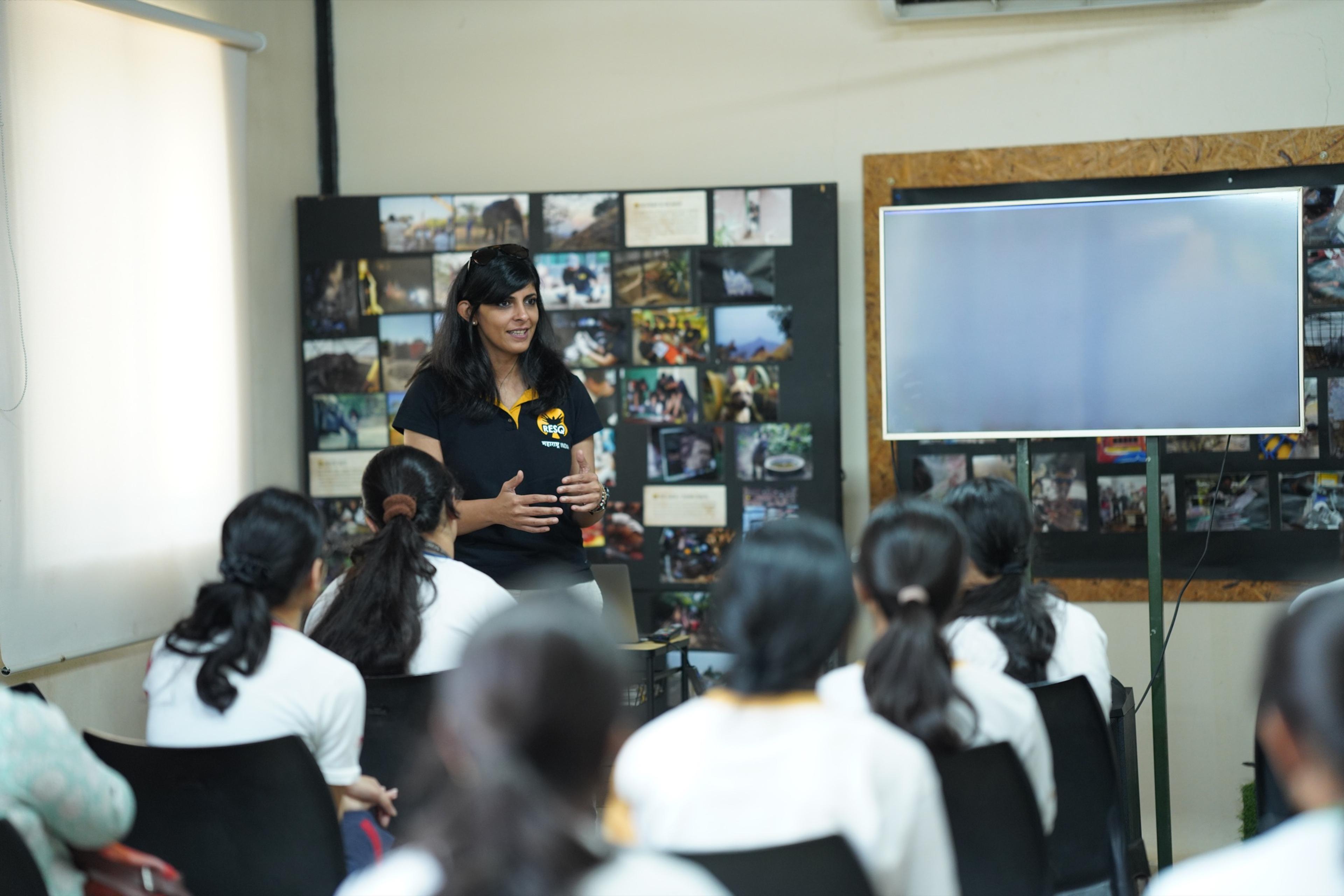
Two hours inside a working rescue and rehabilitation centre, with the people who run it. For individuals, families, corporate teams and delegations. Ages 10 and over, no charge, booked in advance. No contact with the animals.
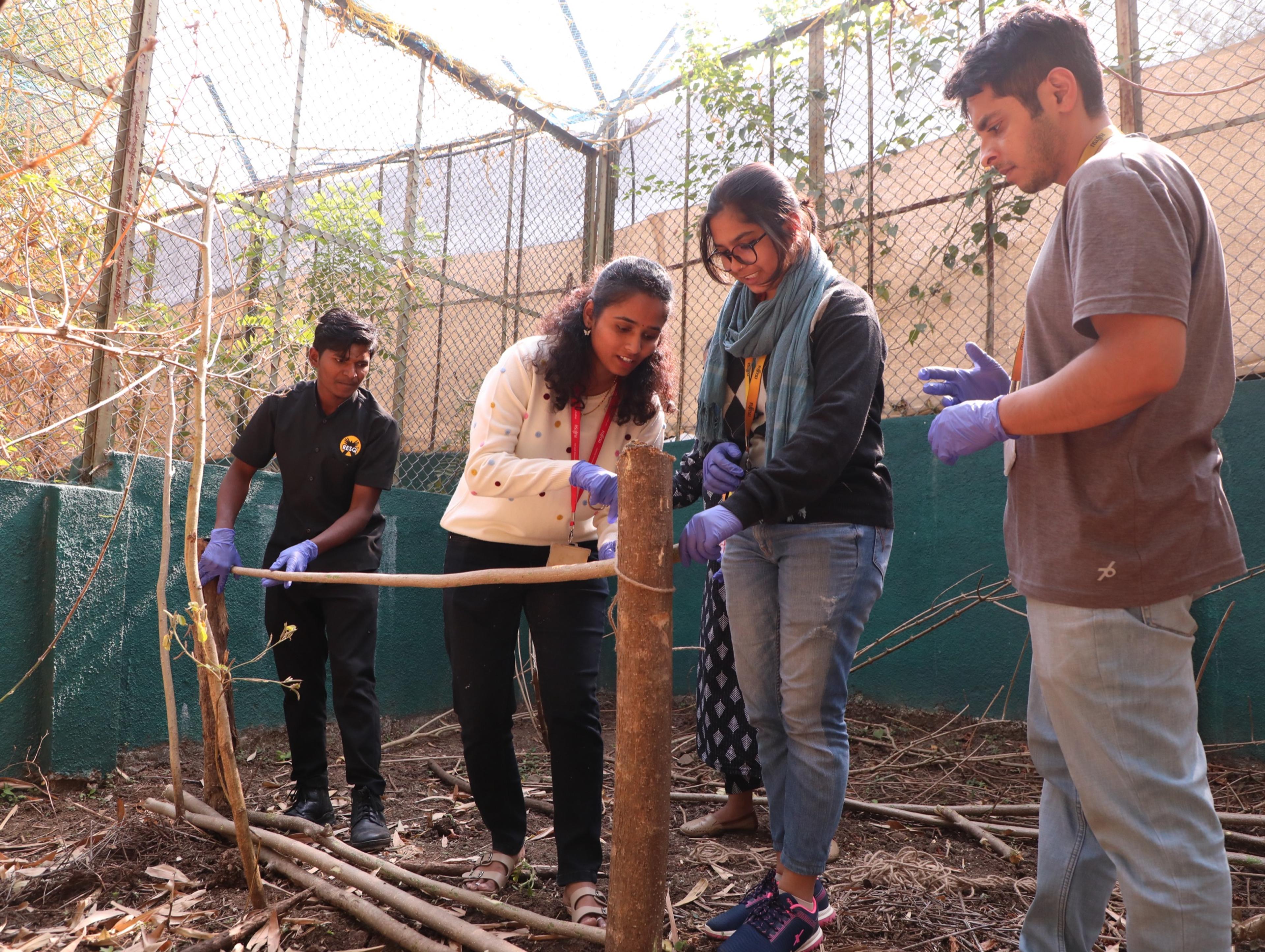
Supervised placements for interns and volunteers on the Veterinary Track or the Applied Wildlife Management Track, and working days for corporate teams. Applications are reviewed, and we cannot always place everyone.
Which route?
Many people hope that visiting or volunteering at a wildlife centre will mean handling wild animals, or watching them from close by. It is a natural thing to want. But an animal that grows comfortable around people loses the wariness that keeps it alive in the wild, and stops being releasable. So we keep our distance, all of us, every day. Neither route offers contact with animals. Once you know that, choosing becomes simple.
| Insight Visit | Volunteering | |
|---|---|---|
| What you do | Walk, listen, ask lots of questions | Physical work: food preparation, cleaning, enclosure preparation, enrichment building, record keeping and more |
| Contact with animals | None | Veterinary interns assist under direct supervision. Everyone else works near animals, never with them |
| Who it is for | Anyone who wants to understand ongoing conservation work | People who want to contribute their time and energy to it |
| Duration | Two hours | Interns: 7, 14, 21 or 28 days, or as an institution requires. General volunteers: any days within three months, at least 50 hours |
| Selection | Based on availability, the waiver and ID | Application, review and an interview; not everyone is placed |
| Cost | None | None, unless you need accommodation, food and utilities |
| You receive | Memories, learning, photographs of your visit | Experience, learning, a certificate if you have earned one, and work that mattered |
| Photography | Our team photographs your visit; personal photography is not permitted | The same |
| Age | 10 and over | 13 and over, with conditions; international interns 18 and over |
An Insight Visit suits you if you are curious: if you have read about a leopard in a well and wondered what happened next.
Volunteering suits you if you would like to be useful: you will chop food, clean enclosures, build enrichment and record observations, and when a rescue comes in you keep doing your task and let the work happen around you.
FAQ
Not on site. Photography, video and recording by visitors, volunteers and interns is not permitted anywhere: animals, staff, facilities and operations. Our own team photographs visits and placements and shares the images with you.
No. Not any animal, not at any time. This hands-off policy applies to everyone on site, including people who have worked here for fifteen years.
Insight Visits: 10 and over. Volunteering: from 13; between 13 and 15 with written parental consent and a reference from a RESQ team member, between 16 and 17 with written parental consent. International placements: 18 and over.
Insight Visits are free, and volunteering and internships are not charged. Residential volunteers pay for accommodation, food and utilities and contribute to wildlife care. International placements are charged by Worldwide Vets under their terms.
Only for the Veterinary Track (qualified veterinarians and final-year veterinary students). The Applied Wildlife Management Track is open to everyone else; a demonstrated interest in wildlife or conservation is enough.
A RESQ volunteer manager, by phone or video. No application is accepted or rejected without this conversation.
At least 50 hours, about 6–8 hours a day, within three months. A typical day runs from 9 or 10 am to 6 or 7 pm, depending on your track.
Possibly, but not guaranteed. Volunteers who show progress and responsibility may join basic field operations, awareness activities and releases when it is safe and the manager agrees. Volunteers never rescue or release animals on their own.
A Certificate of Participation is awarded for 7 to 28 days, or at least 50 hours within three months. Certificates are not issued in advance, and hours cannot be adjusted afterwards.
Personal devices are not used during operational hours, except in breaks.
Confirmed volunteers and interns, Indian or international, can stay on a quiet campus within 500 metres of the centre: air-conditioned twin-sharing or air-cooled single rooms, three vegetarian meals a day (non-vegetarian dinner optional), Wi-Fi, laundry, an outdoor gym and rock climbing. Accommodation, food and utilities are charged; confirm availability in advance.
Call our 24x7 helpline, +91 91725 11100, first. It is an emergency, not a visit booking.
No. All wildlife belongs to the Maharashtra Forest Department, and no one may rescue, house or treat it without authorisation; volunteering does not give you that. Call the helpline instead.
Your visit or placement may be changed, restricted or ended at once. See the Code of Conduct.
If your question is not here, write to team@resqct.org.
Everything we ask of you, and the reasons behind it. Every booking and application confirms you have read it: it takes four minutes.