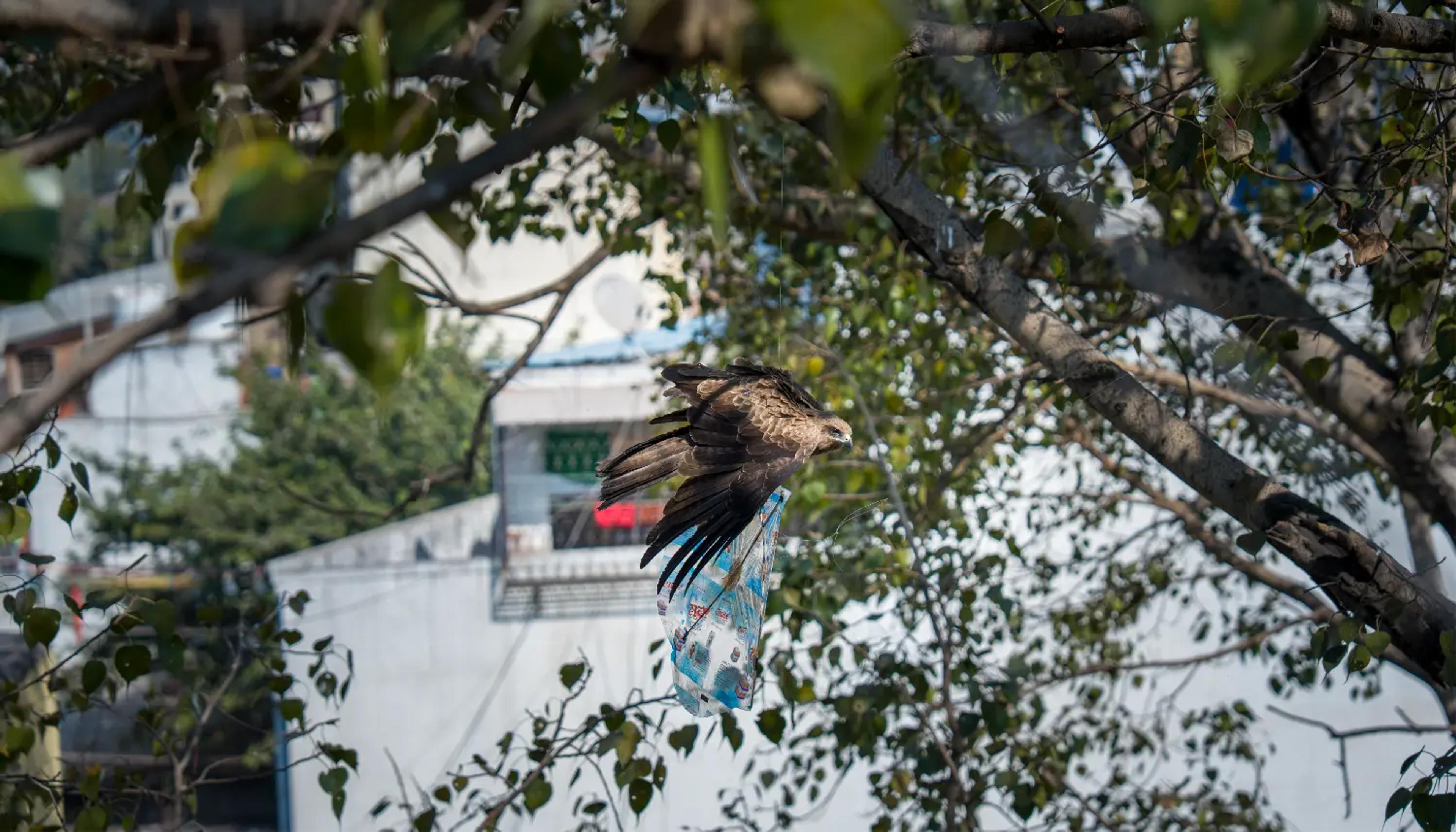
Animals trapped at heights present some of the most technically demanding rescue scenarios our teams encounter in urban areas. Birds entangled in manja on trees or high-tension wires, barn owls caught in safety netting, raptors snagged on stadium floodlight structures, and nestlings stranded in inaccessible canopy locations all require rapid, height-specific intervention where every second of delay compounds the risk of injury, exhaustion, or death.
For these operations, our team deploys a range of specialised equipment calibrated to the nature of the emergency: hydraulic aerial access vehicles and telescopic poles for precision retrieval at altitude, and climbing gear for scenarios where mechanical access is not feasible. Each method is selected with one overriding objective, namely to minimise physiological stress to the animal during extraction. Stress-induced capture myopathy is a genuine and well-documented risk in wildlife rescues, particularly in birds, making the speed, approach angle, and handling technique as clinically significant as any post-rescue veterinary intervention.
Manja injuries account for a significant proportion of the avian cases our clinical team manages, and they are entirely preventable. Nylon manja, the synthetic kite string widely used during festivals, does not yield under tension the way traditional cotton thread does, and its near-invisible profile means birds are often suspended for hours before rescue teams reach them. The clinical challenge lies in avian anatomy itself: bird bones are pneumatised and thin-walled, which makes flight possible but also makes fractures at critical joints difficult to manage. In raptors particularly, deep lacerations, severed tendons, and devascularisation of the distal wing from prolonged circulatory compromise are not uncommon. Sustained exertion during entanglement can also trigger capture myopathy, a condition in which cellular breakdown occurs days after rescue even when the animal appears clinically stable on admission. Despite a ban on synthetic manja, enforcement remains inconsistent, and delayed reporting continues to worsen outcomes for the birds affected.
Every January, kite season lights up the skies, but nylon and glass-coated manja turns celebration into carnage. Birds become entangled, and the razor-sharp line cuts through wings, muscle, and bone, often fatally. Cotton manja offers the same festivity without the injury or death. Joy doesn't need victims, let our celebrations rise without bringing another life down.
Tree felling in cities is often logically justified, but every tree removed displaces the ecosystem it quietly sustained. Over two intense days, our team rescued 84 birds, including 28 pond herons and a flock of cormorants, spanning adults, fledglings, nestlings, and eggs, from a tree slated for removal in a Pune housing society. Each bird was sorted by age, size, and medical need, then brought to the RESQ Centre for treatment, with a hopeful return to the wild ahead.
A myna entangled in plastic thread was found wedged between two wires atop a 115-foot stadium floodlight in Pune, a height and position that made the rescue exceptionally challenging. Quick coordination between the Pune Fire Department and our RESQ team brought her down safely. After recovering at our Wildlife TTC, she was released back into a safe habitat.
Every January, Makar Sankranti fills the skies with kites, and our helpline with calls. Hundreds of birds are found entangled in manja each year, some for days, weeks even, by which time the damage is often severe. Cotton manja is a small switch with a large impact, and it's easily available in Pune. Spot a bird trapped? Don't attempt a rescue, call us on 9172511100 instead.
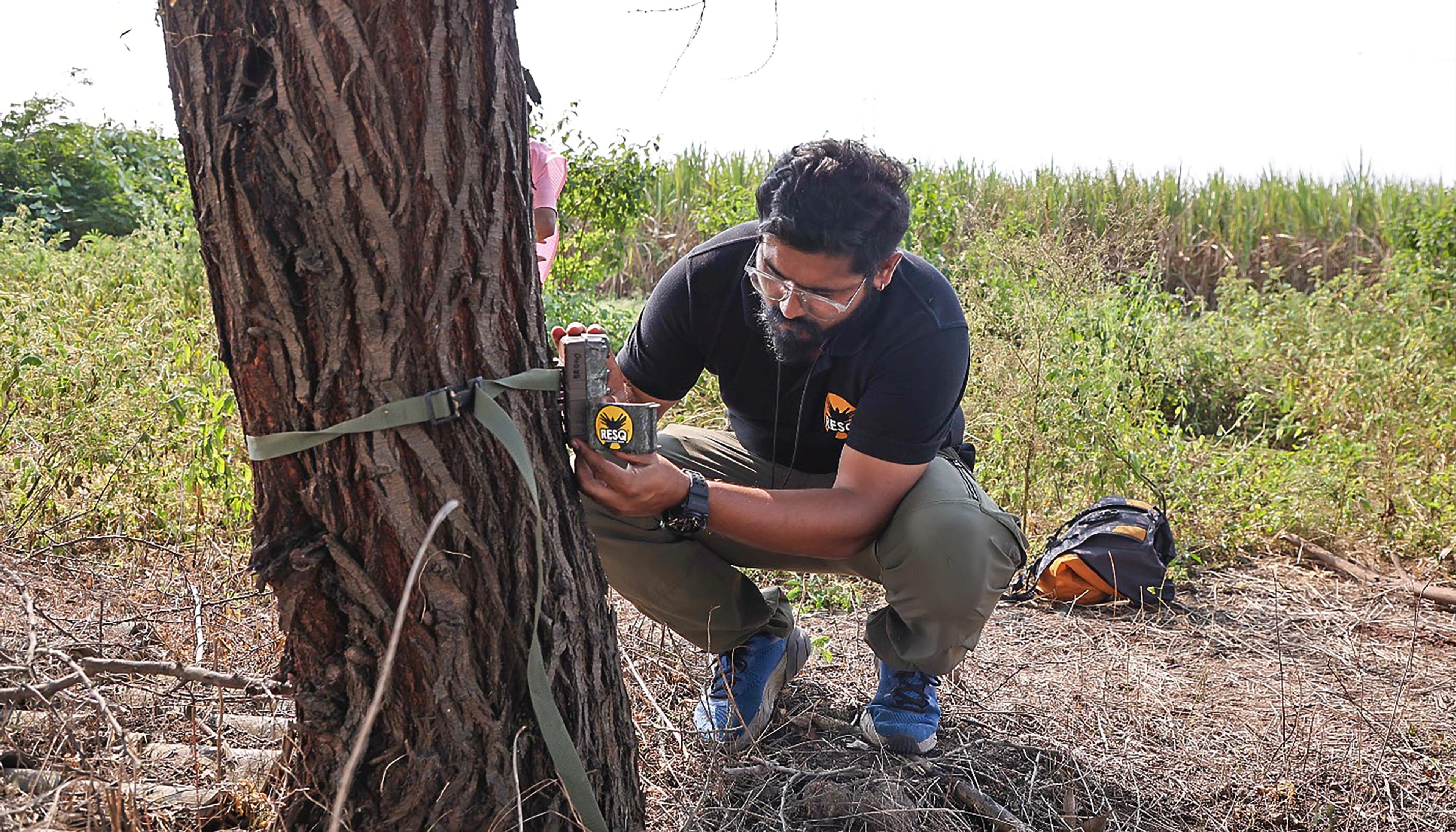 Read moreHuman-Wildlife Conflict ManagementWildlife does not recognise the boundaries that humans draw between forest and field, between protected area and peri-urban fringe. As our landscapes…
In Our work
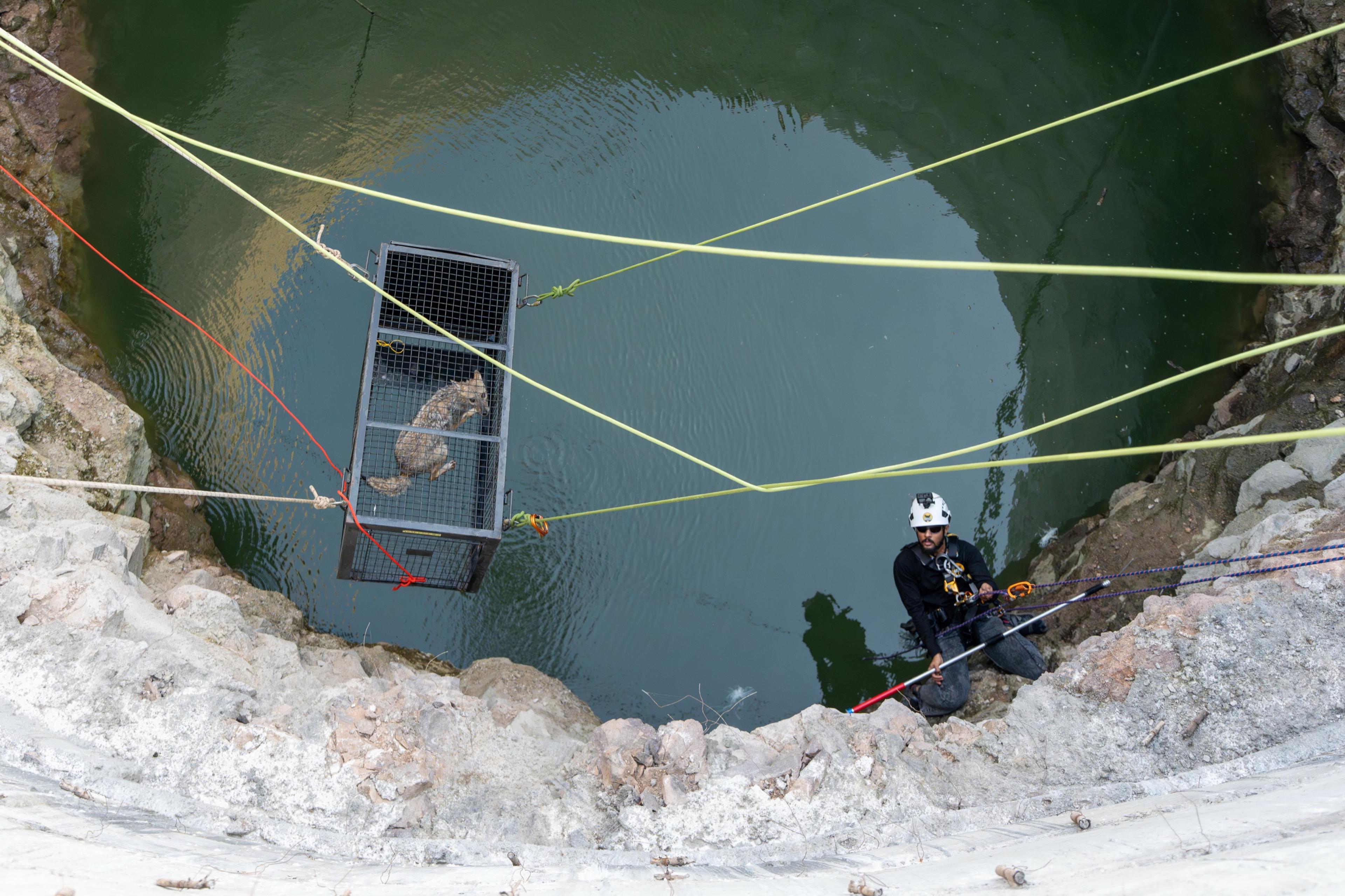 You're hereWildlife emergency responseHuman-wildlife conflict management
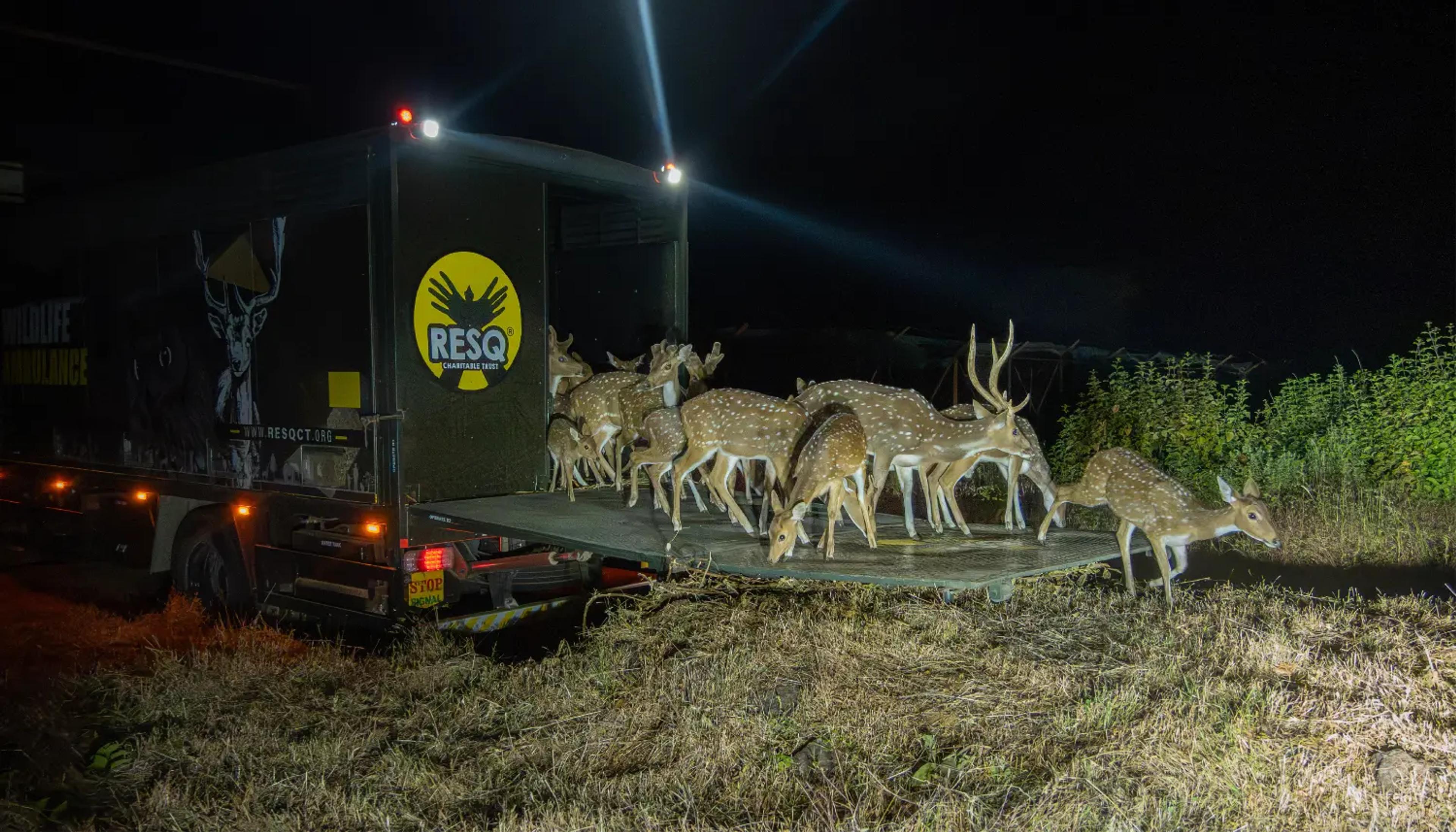 Mass capture & translocations
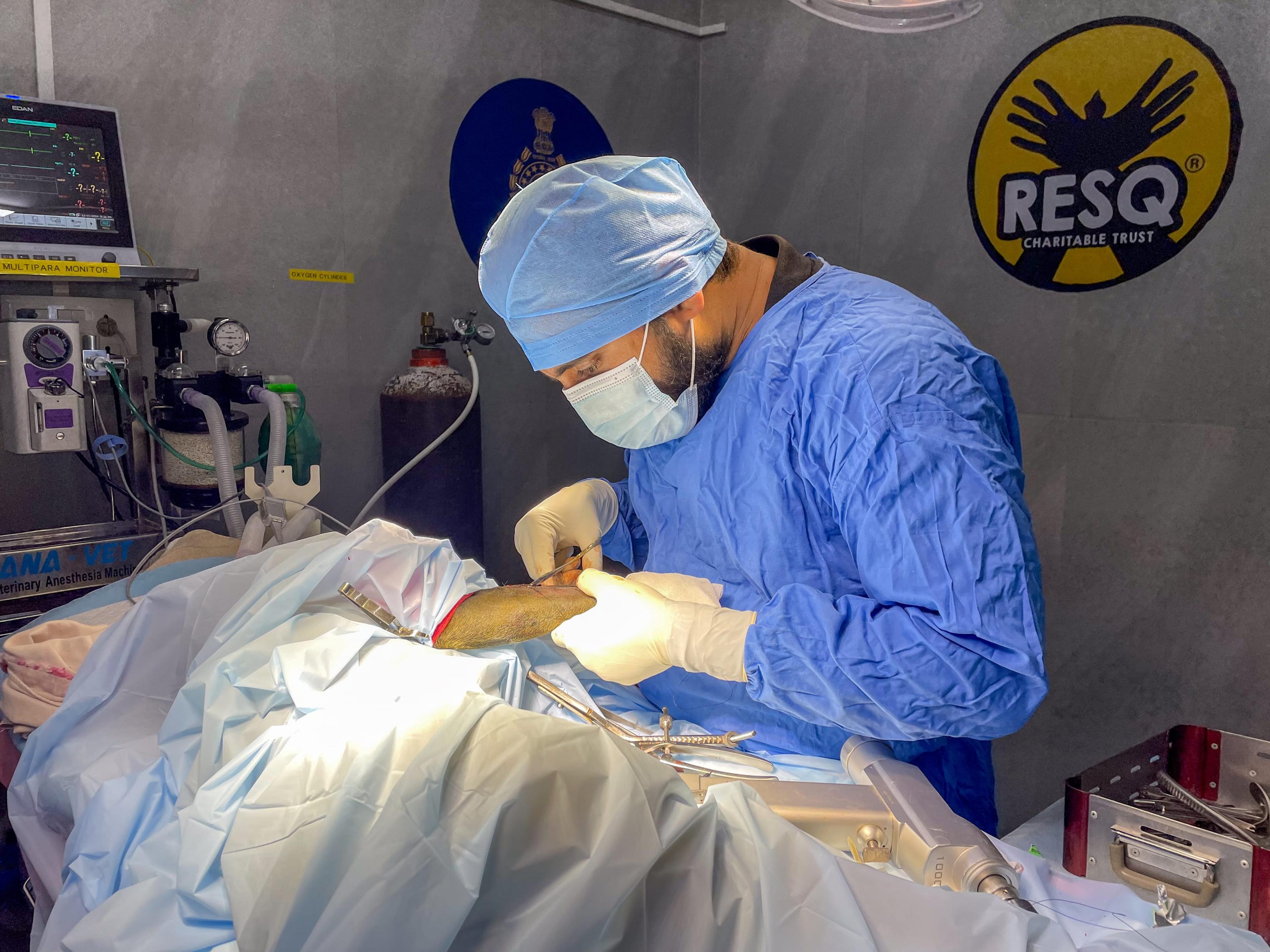 Veterinary care & rehabilitation
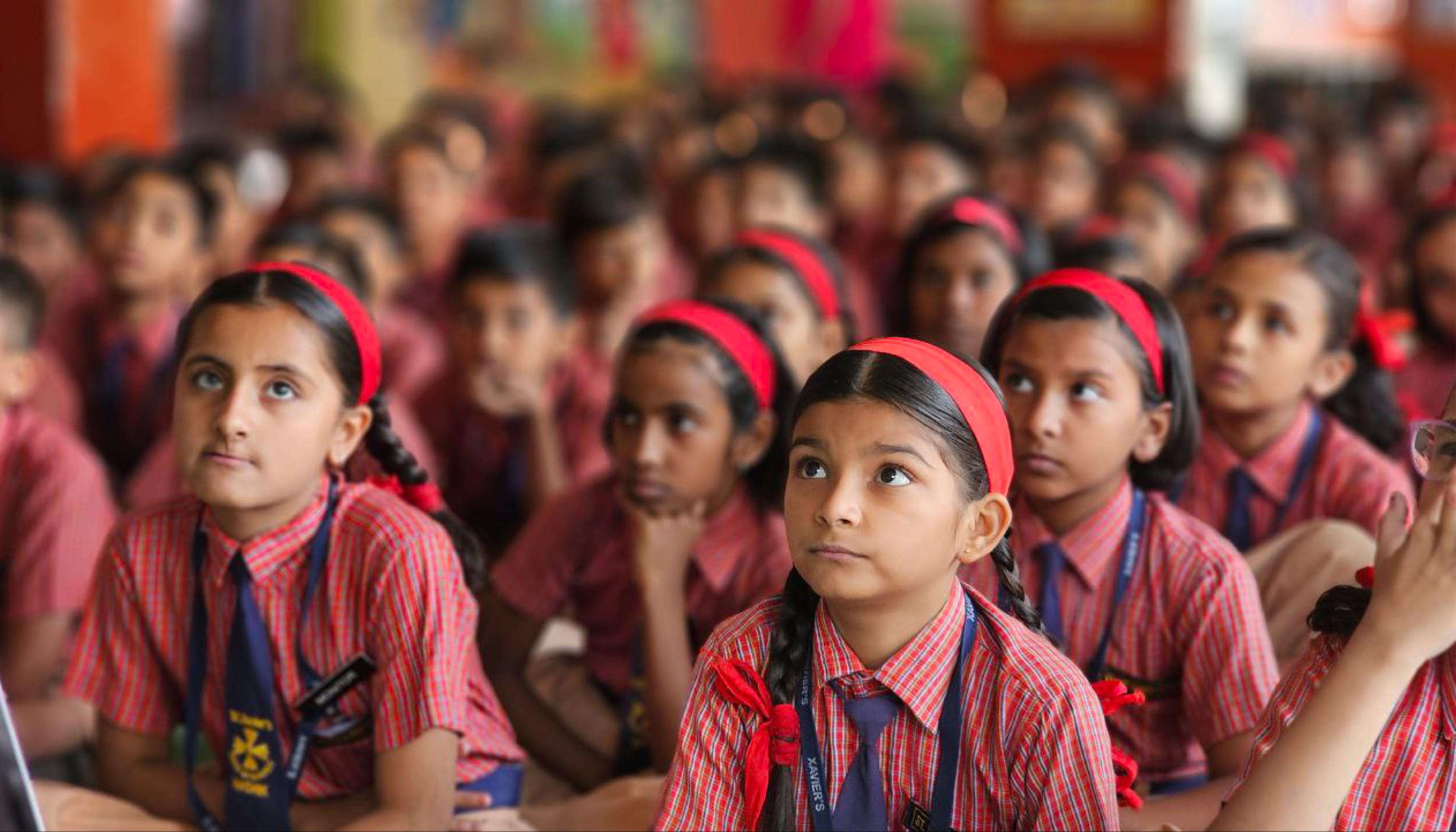 Conservation education
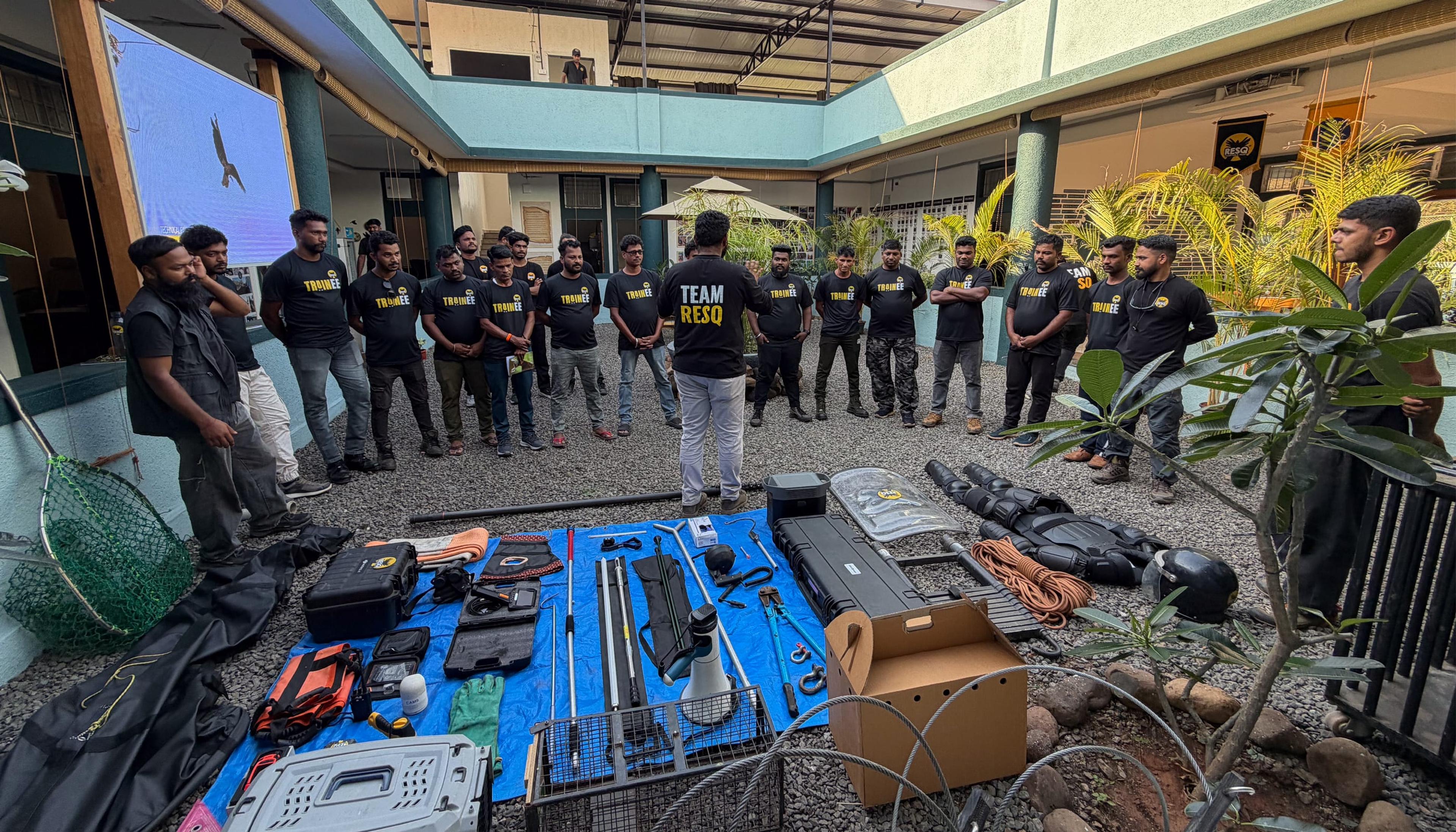 Training & capacity building
Support this work
A rescue is only the first step. Treatment, rehabilitation, release and the prevention work that follows all depend on people who choose to stand behind it.
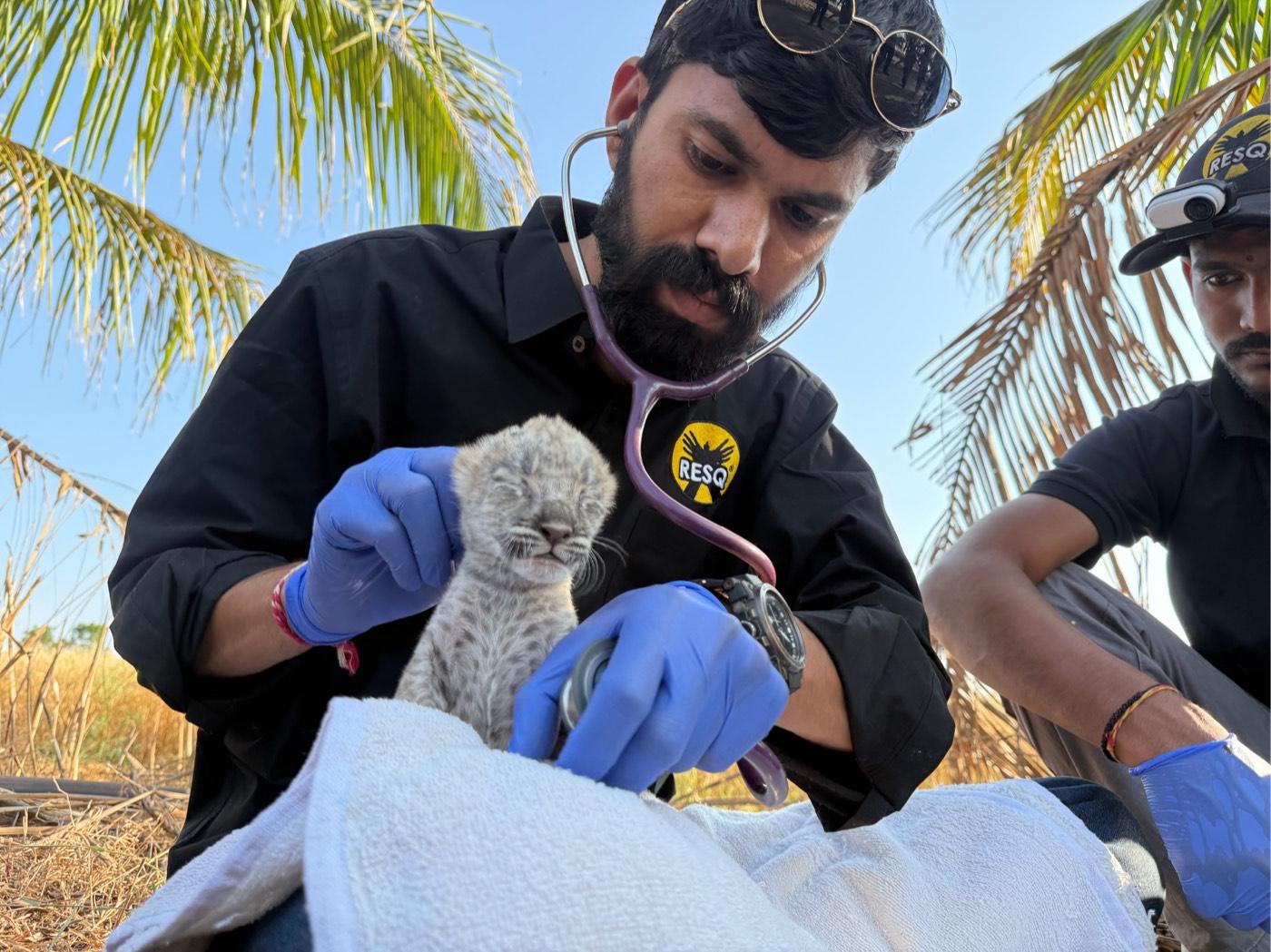
DonatePhoto: a RESQ vet examines a rescued leopard cub in the field.
Work alongside us
Individuals, students and groups support our centres, field teams and outreach programmes through the year. Every volunteer is trained and works to a shared code of conduct.
Volunteer with us